How to Sell Cards at a Card Show: A Guide
Choose Your Route: Sell to Dealers or Rent a Table
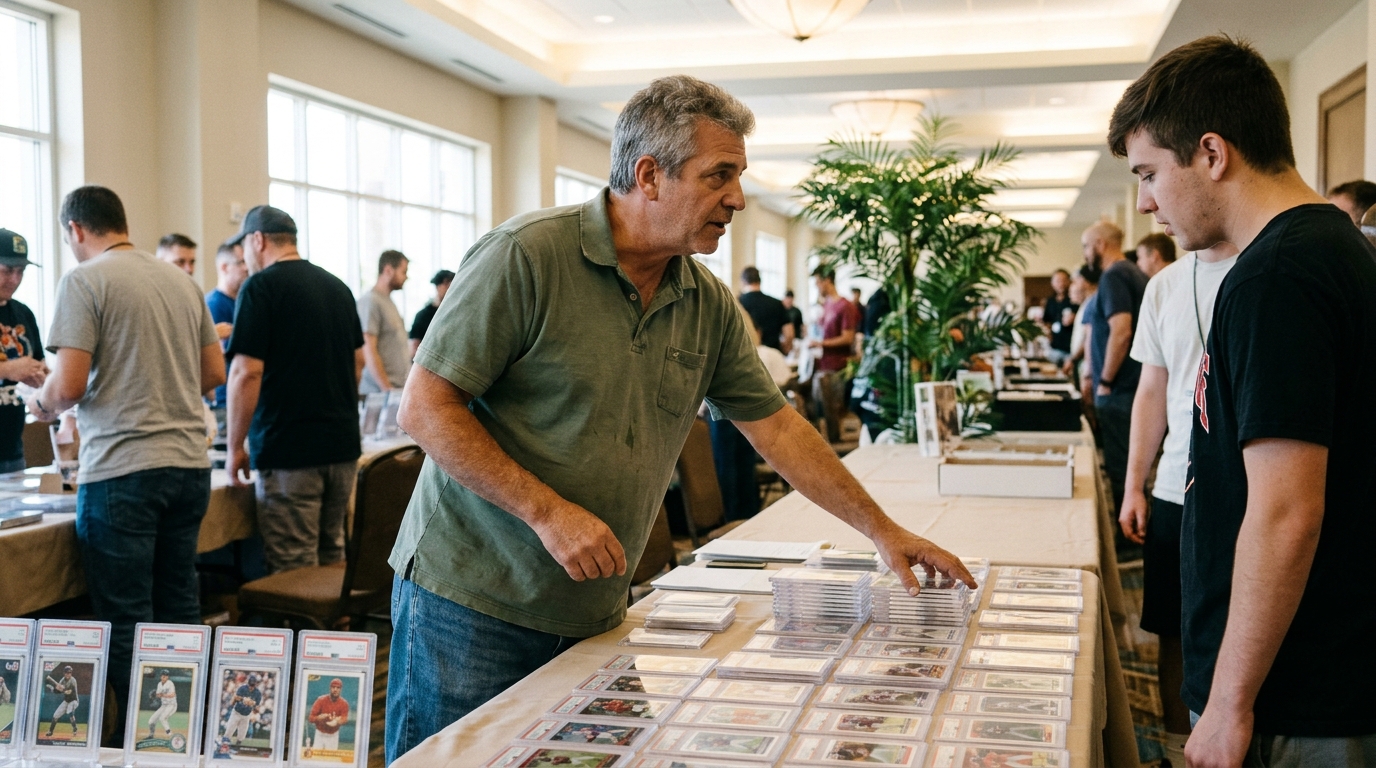
If you want to know how to sell cards at a card show, the first decision is which of two routes you take. You can walk the floor and sell to the dealers working their tables, or you can rent your own table and sell directly to attendees. Both work, and plenty of collectors mix the two. They just reward different amounts of effort.
Selling to dealers is the fast route. You carry your cards in, stop at a few tables, and get offers on the spot. The catch is price. Dealers need margin to resell, and one show guide puts typical dealer offers at roughly 50-70% of retail value. That's not a rip-off. It's what you pay to get cash in minutes and skip the work of finding a retail buyer.
Renting a table offers more upside and a lot more work. You deal with attendees directly, so you can ask closer to market price, but you also pay for the space, sit through the whole show and handle every haggle yourself. Table costs swing widely by show size. One guide puts small local shows at about $40-75 per table and regional shows at $75-150, with major conventions climbing past $200. Treat those numbers as a rough guide, not a rate card, and check the actual vendor price for your show.
Here's a simple way to choose. If you have a modest stack you want gone this weekend, sell to dealers. If you have a few hundred cards, a decent spread of price points and a full day free, a table usually pays better. Not sure? Walk the floor with your best cards first, see what dealers offer, and use those offers to judge whether a table is worth it next time. Our dealer information page covers vendor space for the Palm Beach show.
Prep Your Cards and Set Your Prices With Sold Data
Good prep is the foundation of how to sell cards at a card show successfully, and most of it happens at your kitchen table a week or two before the show.
Sort first. Split your cards into groups you can explain in one sentence: graded cards, rookies, star players, a particular team, vintage, and bulk. Buyers browse by category, and dealers make offers faster on a sorted stack than on a shoebox of mixed cardboard. Pull out anything you'd never sell, so you aren't tempted to price it on the fly.
Protect what you show. One show guide warns that unsleeved cards can signal poor care and make buyers doubt condition, even on cards in fine shape. Put anything worth more than a couple of dollars in a sleeve or top loader. Bulk can stay in boxes.
Price from sold data, not asking prices. Asking prices on listing sites tell you what people hope to get. Sold listings tell you what cards actually went for. Check eBay's sold listings for recent sales of your specific card, and for historical eBay data, one guide points to 130point.com. Match the card exactly: same year, set, parallel and grade. A raw card and a graded copy of the same player can sit worlds apart.
Then adjust for the table. One source advises pricing roughly 10-20% below online prices, because the buyer gets the card immediately, with no shipping and no risk. That discount doubles as your negotiating cushion. If your floor price is what you'd accept online, mark the card a little above it so a small haggle still lands where you want.
Write prices on stickers, sleeves or box labels. Several experienced sellers note that clear pricing cuts down on interruptions and keeps buyers from walking past because they didn't want to ask. For a broader checklist, Ludex's guide to selling trading cards at a card show goes into more detail on preparation.
Set Up a Table That Draws Buyers
A table is a small storefront, and knowing how to sell cards at a card show starts with making sure buyers decide to stop in a few seconds. Your job is to make that decision easy.
Put your best, most eye-catching cards front and center. One guide notes that this is where foot traffic naturally looks first, so a graded rookie or a strong vintage piece belongs there, not in a back box. Use stands or small easels for a handful of showpieces, and keep the rest in boxes people can flip through.
Use signs that sell. Simple, bold category signs do most of the work: "$1 Box," "Graded," "Vintage," "Rookies," or specific team names. A first-time dealer's account in Rorz Cards' tips for selling at card shows covers sign design and box pricing from a beginner's point of view, and it's worth skimming before you build yours. Dollar boxes also pull in casual browsers and kids, who often turn into regular customers.
Don't overload the table. Crowded displays make it hard to see anything. Bring more inventory than you show and refill as things sell. Keep a clear spot to hand over cards and take payment.
Bring the small stuff. A short list covers most problems:
- Extra sleeves, top loaders and a few team bags for sold cards
- A calculator, pen and sticky notes for repricing
- Cash for making change, plus a card reader if you want to accept cards
- A tablecloth, a chair and water
Decide on payment ahead of time. Many buyers carry cash, but plenty prefer tapping a card or using a payment app, and accepting more payment types can mean more sales. If you take app or card payments, set up your reader and test it before you arrive, since show-floor signal can be patchy.
Finally, think about your own presence. Stand or sit where buyers can see you and the cards, say hello, and put the phone away. People buy from sellers who look approachable, and they ask questions of sellers who look up.
Work the Show: Timing, Buyers and Haggling
Once the doors open, learning how to sell cards at a card show comes down to how you spend the day, and that matters as much as what you brought.
Timing. Dealers often do their own buying and trading early, before the general crowd arrives, so if you want dealer offers, get there while vendors are setting up and still looking at inventory. If you're renting a table, arrive early enough to finish setup before attendees come in. The busiest stretch for retail buyers is usually midday on the main show day. Stick around into the afternoon, because late shoppers often come back to cards they looked at earlier.
Know your buyers. Dealers buy to resell, so they'll offer less and move quickly. They respect sellers who know what they have and name a fair number. Attendees buy for their collections, so they care about the card, the player and the story as much as the price. A short, honest description (condition, grade, why it's a good card) goes further than a hard pitch.
Handle haggling calmly. Expect to negotiate. A small discount can decide a sale and bring a buyer back to the next show, as one vendor on the Sports Card Forum puts it. Decide before the show how low you'll go on your key cards, and be willing to bundle. A discount on three cards together often closes a deal that a single-card haggle wouldn't. If an offer is too low, a polite counter keeps the conversation going. If it stays too low, it's fine to say no and move on. Another buyer will come along.
Keep notes. Jot down what sold, what didn't, and what people asked about. That's the most useful information you'll collect all day, and it makes your next table better. For more perspective from people who've done it, Cardboard Connection's local show tips make a solid companion read.
Count Costs and Plan for the Palm Beach Show, November 13-15, 2026
Before you commit to a table, do the math. Start with the table fee, then add travel, parking, meals, supplies and any hotel night. One show-selling guide specifically recommends counting travel, meals and lodging against the table cost before deciding whether a show is worth it. A table that looks cheap can stop being cheap once you add up the weekend.
Then compare that against what you honestly expect to sell. If the cards you plan to bring would net a similar amount from a quick sale to dealers, renting a table may not be worth the extra hours. If your inventory is deep and varied, or you plan to keep selling at shows across the season, the table pays back more easily. Think about tax too. This site hasn't confirmed the details, so check current Florida sales tax rules for card sales with the state before you sell, and keep records of what you take in.
For Palm Beach, the next show is November 13-15, 2026, held in the Palm Beach, Florida area. Collectors can attend as general-admission visitors, with tickets sold through SimpleTix, and dealers can rent vendor space. That makes the show a reasonable test for either route: spend a day as an attendee selling to dealers, or reserve a table and run your own. Check the dealer page for current vendor space details and the home page for the latest show information, since pricing and availability can change.
A practical plan for learning how to sell cards at a card show on your first time: pick your route, prep and price your cards from sold data two weeks out, build a simple table with clear signs, arrive early, and keep notes. Your first show will teach you more than any guide, and the second will be noticeably easier. If you want a fuller walkthrough from the seller's side, Sports Collectors Daily's tips for local card shows is another good read before you go.