How to Become a Card Show Vendor in Florida
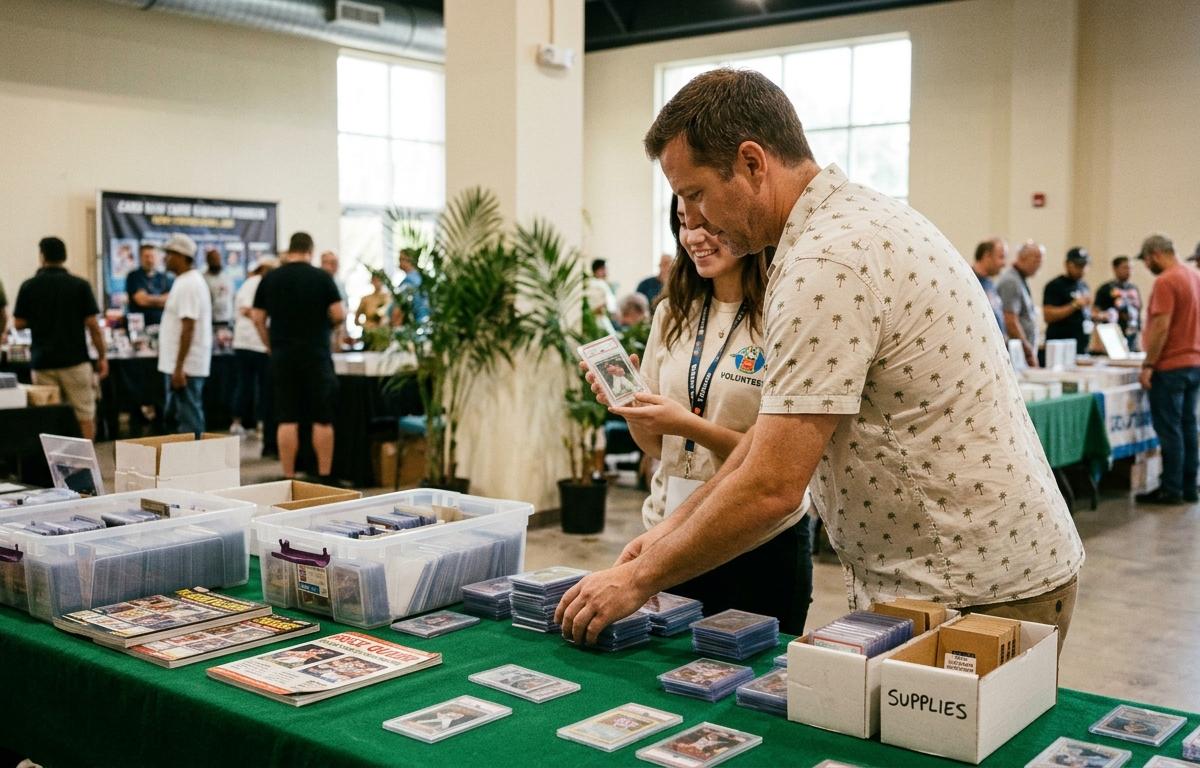
What you need before step 1
Before you chase a table, learn how to become a card show vendor by getting a few basics lined up:
- A realistic starting inventory (a few boxes of singles, some graded slabs, maybe sealed product)
- Cash for change and a way to take card payments
- A budget for the table fee plus travel, food, and supplies
- A free weekend to attend a show as a buyer first
- A plan to check Florida's sales-tax and local permit rules with the state and county
If you want the full selling side after this, our guide on how to sell cards at a card show goes deeper on pricing and customer handling.
Step 1: Find the Right Card Show and Learn the Market First
Learning how to become a card show vendor starts with being a customer. Go to one or two shows before you rent anything. Walk every aisle and watch what moves. Note which tables have lines and which sit quiet. Look at price points, at how dealers organize their boxes, and at what sells in the first hour compared with the last.
Start small if you can. Guides aimed at beginners suggest shows with roughly 10 to 30 tables, since the pressure is lower and the table fee is gentler while you find your feet. A community center or hotel ballroom show is a fair place to start. Larger regional and convention shows pull bigger crowds, but they cost more and park you next to experienced dealers with deep inventory.
South Florida gives you plenty to choose from. Our trading card show today South Florida guide shows what's running near you, and the Trading Card Show Florida 2026 Palm Beach page covers the bigger regional picture. If the hobby floor itself is new to you, card show tips for beginners makes a good warm-up read.
While you scout, ask yourself three things. Which categories dominate: sports, Pokémon, or a mix? What do the vendors along the edges sell that the center tables don't? And where would your own inventory fit? Selling what you know beats selling what you guess will be hot.
Step 2: Understand Table Costs, Fees, and Hidden Expenses
Everyone learning how to become a card show vendor asks about table cost first, and it swings widely. One vendor guide puts regional shows at VFW halls, community centers, and hotel ballrooms at roughly $50 to $150 per table. Another lists small local shows around $40 to $75, regional shows at $75 to $150, and major conventions at $200 to $500 or more. Treat these as ranges from different guides, not current official pricing. For a closer look at what drives the price, see how much a card show table costs.
At the Palm Beach Card Show, past vendor listings showed a table at $400 for the November 2025 show and again for spring 2026. I couldn't confirm the November 2026 price, so check the current vendor ticket listing on SimpleTix before you budget. Recent listings state that a table includes one 8-foot or 6-foot vendor table, two chairs, and two vendor passes, with extra vendor badges at $50 each at check-in.
Then count the costs that never appear on the table fee line:
- Travel, gas, and parking
- Hotel stays if the show runs several days and you're driving in
- Food and water for a long weekend
- Display gear: top loaders, toploader boxes, price stickers, a cash box, signage
- Payment processing fees if you take cards or mobile payments
- Insurance for high-value inventory, if you carry it
Some shows fold local vendor permit fees into the table price, which saves you a scramble for a separate city license. Ask the organizer directly. Sales-tax registration in Florida is a separate matter I couldn't verify from the research, so confirm it with the Florida Department of Revenue before you sell.
One rule of thumb from vendor guides is to aim for sales of three to five times your table cost if you want to feel profitable. Another guide says a first-timer at a small show might clear $100 to $500 in profit after the table. Those are unverified estimates, so use them as a loose target rather than a promise.
Step 3: Apply for a Table and Claim a Good Spot
Once you've picked a show, learning how to become a card show vendor usually comes down to a simple process. You find the organizer's vendor page, choose a table option, and pay through their ticketing platform. For the Palm Beach Card Show, vendor tables are sold through SimpleTix, while the Palm Beach County Convention Center event page lists the show dates and venue details.
Timing matters more than most beginners expect. Past Palm Beach listings said vendors choose their own tables, so the first to secure a table get the best pick of location, and once assigned, tables can't be moved. If that policy still applies, paying early is the closest thing to a way to claim a good spot. A table near an entrance, a main aisle, or a corner gets more foot traffic than one tucked against a back wall.
Before you pay, read the vendor listing carefully:
- What is the table size, and what comes with it
- How many vendor passes come with a table
- What the setup window and move-out time are
- Whether you can leave inventory overnight at a multi-day show
The next Palm Beach show runs November 13 to 15, 2026, at the Palm Beach County Convention Center. Venue listings have shown vendor setup times on each show day and a move-out window at the end of the final day, but verify the 2026 schedule with the organizer. For more on dates and ticketing, our West Palm card show dates, venue, and tickets page and Palm Beach County Convention Center events page keep the basics in one place.
Step 4: Stock Your Inventory and Set Up Your Table
Now build the table you'll actually bring. A common beginner mistake is hauling everything. Pack with intention instead: fast-moving singles, a spread of price points, and a smaller selection of higher-value cards or graded slabs. Premium display space holds only so many slabbed cards, so choose which ones earn a spot.
Think in tiers. A dollar box and a five-dollar box pull in browsers and kids, while a graded case and a few key singles bring in serious collectors. If you're headed to a Pokémon-heavy crowd, the best Pokémon card show Palm Beach page tells you what that audience wants, and our sports memorabilia show Florida guide helps if you lean toward autographed items and vintage.
Pack your supplies the night before:
- Table covering and a few stands or risers
- Top loaders, penny sleeves, and card savers for buyers
- Price stickers and a marker
- A cash box with plenty of small bills
- A card reader or payment app, plus a charged phone
- A folding cart or dolly for loading
Setup is where an average table turns into a good one. Put your best, most eye-catching cards at the front center, where people naturally look first. Label every section clearly, such as "$1 box," "$5 box," or "Graded," so browsers can find what they want without asking. OnTreasure's first-time vendor guide and The Card Shop Finder's selling guide both walk through table layout in more detail, though both come from businesses with a stake in the hobby, so read them as one view.
Step 5: Sell Smart: Display, Multi-Day Planning, and Profit Goals
On show day, your job is to be visible, approachable, and organized. Stand or sit at the front edge of the table, greet people, and let them browse. Keep your prices clear and consistent, and be ready to negotiate, since haggling is a normal part of the floor. Know your top cards well enough to answer a question on the spot.
A multi-day show like Palm Beach, running November 13 to 15, adds a planning layer. Decide before you arrive whether you'll pack out every night or leave inventory in place, and check the organizer's policy on overnight security. Plan to restock between days based on what moved. If your dollar box sold out on Friday, bring more for Saturday. If your slabs sat untouched, move a few somewhere more visible or adjust the price.
Track your numbers as you go. Write down your table cost, your total sales, and what you spent on the weekend. Then compare the result against the three-to-five-times-table-cost target from vendor guides. If you cleared the table fee and travel with something left over, you have a workable model. If not, your notes will show you what to change, whether that's a smaller table, a different show, or tighter inventory.
If you're still learning how to become a card show vendor, treat your first show as tuition. You'll make small mistakes, like underpricing a key card or overpacking boxes you never open, and that's normal. The vendors who stick with it tend to return to shows, build a regular customer base, and move up from one table to a larger spot over time. If the November 2026 Palm Beach show is your first, claim your table early, bring inventory you know well, and use the weekend to learn.